
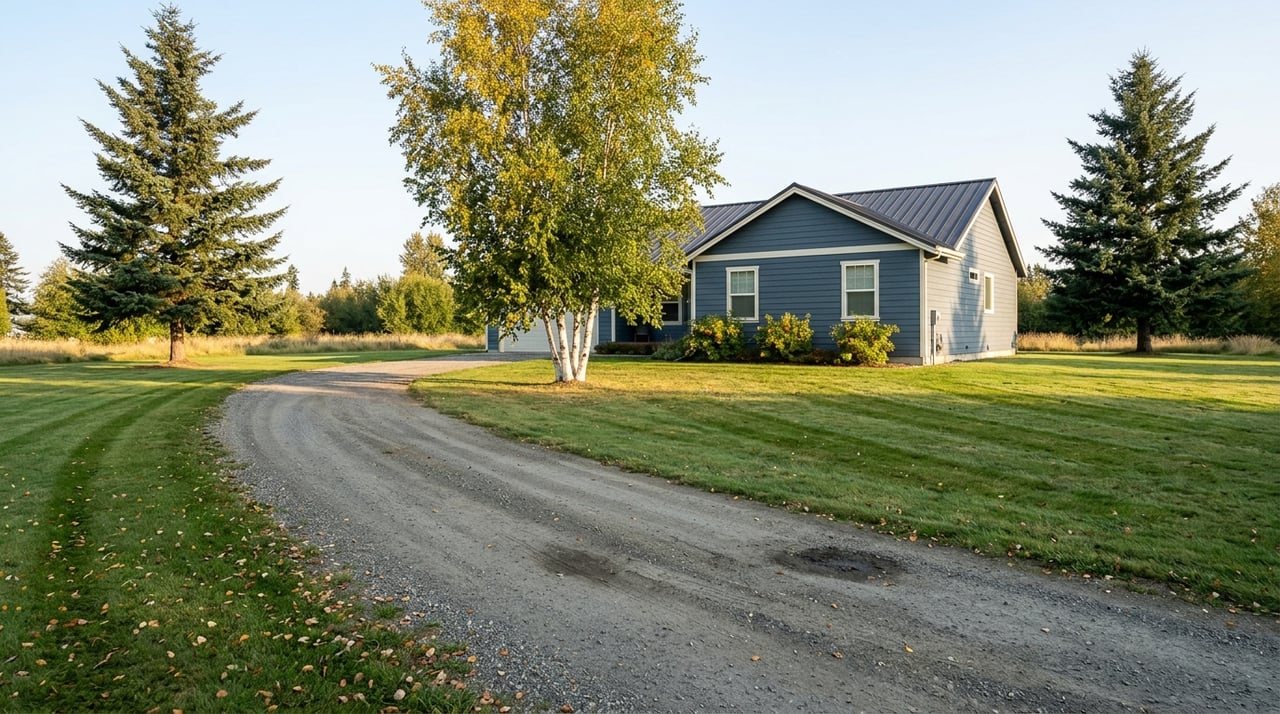
August 27, 2026
Most sellers assume the well and septic disclosure is a formality: check a box, note the pump-out date, move on. In Homer, it can be the single item that determines whether your closing happens on schedule or slides by weeks.
That's because Homer's disclosure problem isn't really about honesty. The problem is proof. The state agency that holds septic and well records files everything by legal description, not by street address, and Homer's ground itself makes those systems more likely to need a documented history in the first place. Put those two facts together and you get a transaction risk that has nothing to do with the size of the tank or the depth of the well and everything to do with paperwork that either exists in a searchable file or doesn't.
The City of Homer runs a single public water source: the 37-acre Bridge Creek Reservoir. There's no backup groundwater well or secondary surface source in the city's system. That water and the accompanying sewer lines reach roughly 1,500 connections, according to the city's own public works overview. Everything outside that service boundary, and the boundary itself is set by city council resolution and subject to approval by the Regulatory Commission of Alaska, runs on private wells and on-site septic systems instead.
Here's the part that surprises people who assume city limits and city utilities are the same thing: they aren't. The city's own water system master plan describes its study area as including not just neighborhoods on the public system, but "adjoining subdivisions within the City limits now served with private water wells, septic systems, and haul systems." In other words, being inside Homer proper doesn't guarantee a hookup. Plenty of parcels sit on private systems by default, simply because the utility line hasn't reached them.
Homer's public works documentation is unusually candid about why private systems in this area deserve more scrutiny than in most towns. The city's own water system overview states plainly that groundwater here is generally unsuitable for residential wells because of low yields, shallow depth, no significant freshwater aquifer, and saltwater intrusion. On the wastewater side, the same documentation attributes poor performance in many on-site systems to "poor perking soil conditions and a perched groundwater table."
None of this means every well or septic system in the Homer area is failing. It means the baseline conditions here give private systems less margin for error than they'd have somewhere with better-draining soil and a deeper aquifer. For a buyer's inspector, that's a reason to look closely. For a seller, it's a reason to have your paperwork ready before anyone asks for it.
Nolo says Alaska's Residential Real Property Transfer Disclosure Statement has to reach a buyer before they submit a written offer, not after. On a property with a private system, the State of Alaska Residential Real Property Transfer Disclosure Statement asks you to identify the sewer type (public, private, community septic, or holding tank), any maintenance history or documented failures, and, on the water side, whether the source is a well, its flow rate, and any known water quality or contamination issues. It also asks what documents you have on hand, including well logs, energy rating certificates, or shared septic agreements if the system serves more than one property.
The standard here is what you know or can reasonably find, not the outcome of a professional inspection you're required to commission. That said, a disclosure that says "unknown" on a system you've lived with for a decade tends to draw more attention from a buyer's agent than one with a specific answer and a document to back it up. And if the home was built before 1978, the well and septic form isn't the only one you'll need. Federal law requires a separate lead-based paint disclosure and an EPA-approved pamphlet for anyone buying a pre-1978 property.
When a buyer's lender or agent wants to confirm a septic system's history, the request goes to the Alaska Department of Environmental Conservation's Engineering, Sanitation and Permitting Review section. ESPR searches its records by legal description: subdivision, lot, and block for most residential parcels, or survey and tract, or township and range for others. It cannot search by mailing address.
That single detail is where a lot of Homer transactions lose time they didn't budget for. If a lot has been resurveyed, replatted, or had its boundaries adjusted since the septic system was originally permitted, the record on file may not be attached to the legal description the parcel carries today. Older submissions filed before 2022 are especially prone to this, since they don't show up by default on ESPR's public map and have to be pulled manually. As DEC's own guidance on the subject puts it, with on-site systems "the land is part of the system," so even a small lot line shift can leave part of a tank or drainfield recorded under a parcel that no longer matches the one being sold.
Here's what that costs in real time and real dollars, based on DEC's current fee and turnaround schedule:
| Task | Fee | Typical turnaround |
|---|---|---|
| Records search by legal description | $25 retrieval fee | 5 to 10 business days |
| Engineering report registration (new documentation of an existing system) | $115 registration fee | Filed after engineer inspection |
| Complete engineering plan review (if a system needs re-documentation or repair design) | Included in registration | 30 days for a complete submittal, longer if information is missing |
Thirty days is a long runway if it starts the week before closing. It's a non-issue if it starts the week you decide to list.
If your Homer property runs on a well, a septic system, or both, a little advance work removes most of the risk:
If you don't know where to start on the legal description itself, the Kenai Peninsula Borough's planning and platting division can confirm current parcel boundaries.
Out-of-state buyers often assume a well and septic disclosure is something to review once, during due diligence, and forget. In Homer, it's worth treating as a scheduling question from the start. If your lender wants confirmation of a septic system's documentation and that search turns up nothing under the current legal description, you're looking at the 30-day engineering review window, not the 5-to-10-day records search. Ask your agent to request the ESPR search the same week you go under contract, not after your inspection period is already ticking.
Does Alaska require a septic inspection before I list? No. The disclosure law asks for what you know, not the result of a professional inspection you're obligated to commission. Many sellers choose to get one anyway, since a documented system is easier to disclose accurately than one you're guessing about.
What if I genuinely don't know whether my property has a septic record on file? That's exactly what the ESPR records search is for. Request it by legal description as early as possible, since a "no record found" result early in your listing timeline is far less costly than one that surfaces during a buyer's financing deadline.
Does being inside Homer's city limits mean I'm on city water and sewer? Not necessarily. The city's own planning documents describe subdivisions inside city limits that still rely on private wells and septic systems. The utility line, not the city boundary, is what determines your system type.
Well and septic paperwork rewards sellers who start early and penalizes the ones who wait for a buyer's lender to ask first. If you're weighing a sale in Homer and want a clear-eyed read on what your specific property will need before it hits the market, Valerie Buss - Kachemak Real Estate Group can walk through your documentation with you and flag exactly where the timeline risk sits. Schedule a free consultation and let's get ahead of it together.
This article is general information, not legal, tax or financial advice. Consult a qualified professional about your situation.
Stay up to date on the latest real estate trends.



Leading with our core standards and values we approach every decision with honesty and integrity. We take great responsibility in doing the right thing because it is the right thing to do.