
September 17, 2026
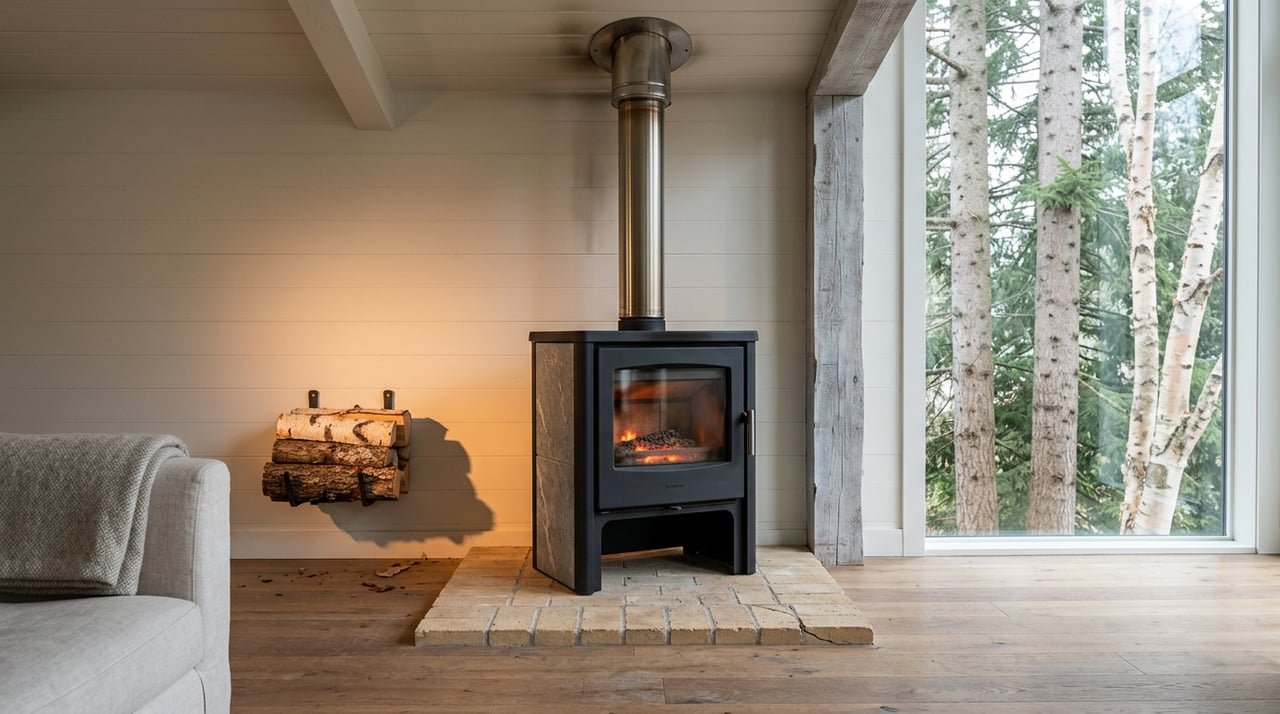
Picture two listings that could pass for twins. Same neighborhood off East End Road, same bay view through the spruce, same asking price down to the dollar. One has electric baseboard heat and nothing else. The other has electric baseboard plus a wood stove insert sitting in the family room, the kind sold down the road at VBS Heating. Most buyers glance past that stove the way they'd glance past a ceiling fan. This winter, that stove is doing more work than the view.
Homer Electric Association generates nearly 90 percent of its power from natural gas, and that gas comes from Cook Inlet through Enstar's pipeline system. Unlike Chugach Electric or Matanuska Electric Association, which can shift some of their generators to diesel and free up gas for home heating if the pipeline gets tight, HEA has no such fallback. When the regional gas supply runs short, there is no lever inside HEA's own system to pull. The exposure runs straight through to the meter on your house.
That exposure is not hypothetical this year. Enstar's president, John Sims, told state lawmakers in August that the region is short by roughly 3 billion cubic feet of gas heading into this heating season. Kenai's mayor put a sharper number on it at a September 2 council meeting, citing Sims's estimate that the shortfall equals about 18 days of winter demand if temperatures run normal to slightly cold. Gas that Enstar had been counting on from BlueCrest Energy's Cosmopolitan Unit was expected online by early September. As of this month, it isn't there yet, though any of it that arrives later in the fall would still help close the gap.
"If it's like last winter, we won't make it without some sort of curtailment," Sims said.
Curtailment, in plain terms, means HEA asking members to turn down thermostats or lean on wood or oil heat instead of electric. That request would not fall evenly across every Homer household. It would fall hardest on the homes that only have one way to stay warm.
You do not need a worst case winter to see this mechanism at work. It already showed up in HEA's own rate filings this year. The Cost of Power Adjustment, the line on every member's bill that passes through the utility's actual fuel cost with no markup, dropped 14.8 percent for the first quarter of 2026, from $0.10937 per kilowatt-hour down to $0.09317, as a larger share of HEA's generation came from Bradley Lake hydropower instead of gas. By April 1, 2026, that same COPA rate had climbed back up to $0.10922 per kilowatt-hour, a jump of about 17 percent in a single quarter. Layer in the 4 percent base rate increase HEA's board approved for January 2026, driven by materials costs that have more than doubled over five years against rate increases of only 6.5 percent over the same stretch, and you get a bill that can move meaningfully from one quarter to the next based on how much hydro is flowing and how tight the gas market is.
None of this shows up on a listing sheet. A square footage number and a lot size do not tell you whether the house you're touring can absorb a cold snap without a bigger bill or a curtailment notice attached to it.
The City of Homer's own guidance on home heating options lays out the tradeoffs plainly, and it's worth understanding before you tour your next house rather than after you close on it.
| Heat source | What it takes to add or keep it | Where it sits in a gas squeeze |
|---|---|---|
| Electric baseboard only | No conversion cost today, but switching to gas later means a new boiler and a new distribution system, not just a swap | Fully exposed to HEA's gas-dependent generation and any curtailment request |
| Wood stove or wood boiler | Cost depends entirely on whether you're buying cord wood or cutting your own | Independent of the electric grid entirely once it's running |
| Oil-fired boiler | Newer units can often be converted to natural gas by replacing the burner, subject to warranty terms | A hedge, provided the oil tank is filled and delivery is current |
| Propane space heater | Some models, Rinnai among the common brands in Homer, convert to natural gas fairly easily, though venting and plumbing may not carry over | Depends on tank size and delivery access |
The pattern in that table is the whole argument. Anything that runs on stored fuel, wood in a shed or oil in a tank, keeps working during a pipeline shortfall. Anything wired straight to HEA's grid does not have that option.
When you're standing in a house that might be your next one, the questions worth asking are simple and specific.
None of these questions require an inspector. They're the kind of thing you can ask while you're already standing in the room, and the answers tell you more about your winter budget than the finish on the kitchen counters.
HEA is not standing still on this. CEO Brad Janorschke told an Anchor Point community meeting last October that the utility's goal is to generate electricity without natural gas at all, and HEA has been assessing four wind sites, three onshore and one in Cook Inlet, along with the Dixon Diversion Project, which would route glacier melt into the Bradley Lake hydro system to boost the utility's non-gas generation share. Those are real projects with real engineering behind them. They are also multi-year efforts, not something that changes the math on the house you're touring in October.
If you're comparing Homer to a Lower 48 market you already know, this is the kind of friction that doesn't come up in that comparison at all, because most Lower 48 grids don't have a single utility this concentrated on one fuel with no alternate generation to fall back on. If you're comparing Homer to Kenai or Soldotna, the exposure is the same, since HEA serves the whole southern peninsula from Sterling down to South Kachemak Bay. The difference shows up house by house, not town by town. A home with a second heat source already built in is quietly worth more than its price tag suggests, because it's the one line item that protects you from a specific, documented, currently unfolding regional risk.
The view still sells the house. The heat source is what gets you through February.
Does this mean buying in Homer is a bad idea right now? No. It means asking one more specific question on every showing, the same way you'd ask about a septic system's age or a roof's last inspection.
Will my electric bill definitely go up this winter? Nobody can say that with certainty. What's certain is that HEA's COPA has already swung by double digits within a single year, and the utility itself has said curtailment is on the table if this winter runs cold like the last one.
Is a wood stove enough, or do I need oil too? That depends on how much you're willing to manage cord wood delivery and stacking. A stove that's actually used and maintained is a real hedge on its own. Adding oil as a second layer is what a lot of longtime Homer homeowners do, and it's worth asking the seller directly whether the tank has been kept full.
If you're weighing a purchase in Homer this fall and want a second set of eyes on what a specific listing's heating setup actually means for your winter costs, that's exactly the kind of walkthrough conversation Valerie and Becky have with buyers every week. Schedule a Free Consultation and bring your questions about the house, not just the view.
Stay up to date on the latest real estate trends.
Leading with our core standards and values we approach every decision with honesty and integrity. We take great responsibility in doing the right thing because it is the right thing to do.