
April 16, 2026
Thinking about buying land and building a home in Homer? The view and the acreage can be exciting, but the purchase price is only part of the story. If you want to make a smart move, you need to understand access, utilities, soils, and permitting before you fall in love with a parcel. Let’s walk through what matters most in Homer so you can buy with more confidence.
Buying raw land in Homer is not the same as buying a ready-to-build lot in a fully serviced subdivision. In many parts of the Kenai Peninsula Borough, land use is lightly restricted unless a specific overlay applies, but that does not mean every parcel is simple to build on. It means your due diligence matters even more.
According to the Kenai Peninsula Borough's local governance and permitting information, the borough governs land-use regulation and platting boroughwide, while the City of Homer handles zoning, floodplain, driveway, and utility permits inside city limits. That split matters because the rules that affect your parcel depend on where it sits.
Homer also has some very real site conditions that can affect building plans. The city’s relocation guide reports about 24.7 inches of annual rainfall and 54.9 inches of annual snowfall, which can influence drainage, driveway design, and seasonal construction timing. On top of that, Homer planning documents flag coastal flooding, tsunami exposure, bluff erosion, and Seismic Zone IV conditions on certain sites.
Before you think about house plans, confirm how you will legally and practically reach the property. Access should be treated as a separate issue from the land price because road conditions, driveway work, and maintenance responsibility can all affect cost.
Within Homer, the city requires a driveway permit before any work starts in a street right-of-way, and the work is inspected before approval. On the borough side, road maintenance can fall to the Road Service Area, the state, a city, a private developer, or even an individual owner, depending on the road.
This is one of the easiest places for buyers to make a costly mistake. A parcel may look accessible on a map, but you still want to verify who maintains the road, what condition it is in, and what it may take to create or improve a driveway.
In Homer, overlays can change what a parcel can support. A lot that looks ideal at first glance may come with building setbacks, floodplain rules, wetland permitting, or habitat protections that shape where and how you can build.
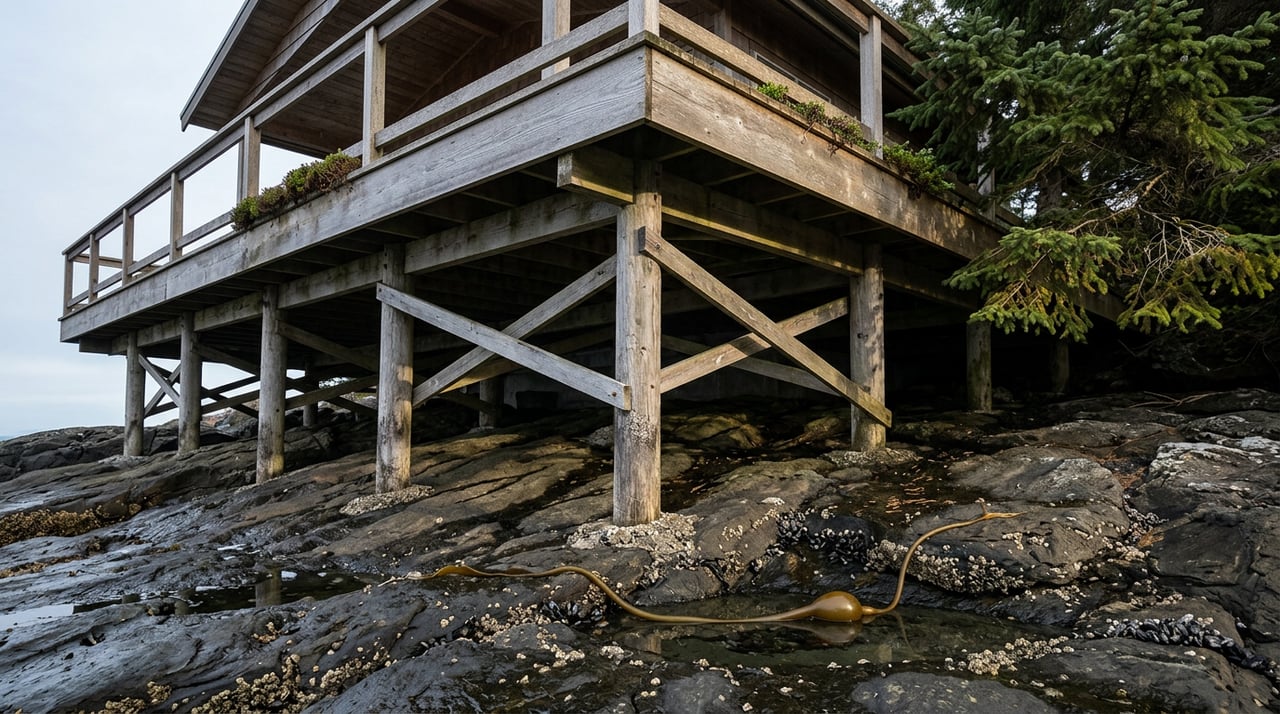
The city notes that construction in mapped coastal flood hazard areas requires a Flood Development Permit, and parts of the coast include VE and AE flood zones. The same city guidance also notes that building in wetlands or filling them requires a U.S. Army Corps of Engineers permit, and the borough’s Habitat Protection District creates a 50-foot setback from anadromous waters.
Timing matters here too. Homer’s permit information explains that wetland determinations and related permitting can take several weeks to a month or more. That is why early screening is so important before you spend too much on design, surveys, or financing steps.
Utilities are often where raw land budgets change fast. In Homer, one of the biggest questions is whether the parcel has practical access to public water and sewer or whether you may need alternatives.
Inside city limits, Homer Public Works maintains the public systems, with 42.36 miles of water mains and 49.19 miles of sewer mains. Some city lots may have more straightforward utility options, while others may still require more investigation based on location and connection availability.
Outside served areas, conditions can be more complex. The city’s water and sewer master plan says many homeowners rely on wells or hauled water, but it also states that groundwater in Homer is generally unsuitable for many residential and commercial wells because of shallow groundwater, low yields, limited freshwater aquifers, and saltwater intrusion near Kachemak Bay.
That means a parcel with no city utility access is not automatically a deal breaker, but it does require a more careful review of realistic water and wastewater solutions.
The borough comprehensive plan notes that in low-density areas, extending roads or utilities can cost as much as or more than the land itself. It also explains that utility extensions may sometimes be financed through a Utility Special Assessment District, but that adds coordination, approvals, and cost.
A beautiful lot can still be difficult to build on if soil conditions do not support your wastewater plan. In Homer, soils and drainage are not minor details.
The city’s master plan states that many on-site wastewater systems function poorly because of soil conditions. It also notes runoff-related erosion and bluff erosion in some areas, which makes grading, drainage, and pad placement especially important.
For properties not connected to city sewer, the same planning documents explain that homes often rely on individual septic systems or holding tanks. Depending on the site and system design, DEC documentation can require a soil absorption cross-section and testhole log, or a sealed soils report and percolation results.
In simple terms, you want to know whether the dirt works before you assume the lot works. Septic feasibility can have a major effect on both cost and build design.
Many buyers assume that if they own the land, they can move straight into construction. In Homer, the process is more layered.
The City of Homer states that it does not issue building permits and does not have a building inspector, but it does require zoning permits and other development-related permits before clearing or new construction. Public Works also handles driveway and water/sewer permits.
The city’s permit page says zoning permits are only issued after all other required permits have been submitted, and complete zoning review can take up to 10 working days. If your project requires a Conditional Use Permit or another public hearing approval, the city says that generally adds at least two months to the timeline.
For some larger or more complex projects, Homer may also require a Development Activity Plan and, in certain cases, a Stormwater Plan. This is especially important when grading, steep slopes, or impervious surface thresholds come into play.
If you are buying land to build in Homer, the safest path is to work through the big feasibility questions in the right order. That helps you avoid spending money on plans for a site that may have preventable issues.
Confirm jurisdiction and access
Review overlays and site limits
Verify water and wastewater options
Study soils and drainage
Map out permits and timeline
One of the biggest mistakes buyers make is focusing too much on acreage and not enough on total development cost. In Homer, the lot price is only the starting point.
Cost drivers often include access improvements, utility extension, septic or holding-tank solutions, hauled-water planning, drainage and fill, wetland mitigation, flood-related requirements, and specialist reports like surveys, engineering, or soils work. On shoreline, bluff, or low-lying sites, the costs can rise further if elevation, erosion control, or flood-related design measures are needed.
That does not mean you should avoid raw land. It means you should evaluate the parcel based on total feasibility, not just the listing price. A less dramatic parcel with better access and utility options may be the better long-term value.
When you are buying land in Homer, local knowledge can help you ask better questions early. That is especially valuable if you are relocating from outside Alaska or comparing several types of parcels at once.
The right support can help you sort through city versus borough rules, flag red-flag site conditions, and focus your time on parcels that better match your goals. Whether you are looking for a private homesite, coastal property, or acreage with room to build, clear guidance can save time and reduce surprises.
If you are thinking about buying land and building a home in Homer, the Buss & Turkington Real Estate Team can help you navigate the local market with honest insight and practical next steps.
Stay up to date on the latest real estate trends.
Leading with our core standards and values we approach every decision with honesty and integrity. We take great responsibility in doing the right thing because it is the right thing to do.